We can learn A Lot of things from Trees.
And I saw an angel coming down out of heaven, having the key to the Abyss and holding in his hand a great chain.
"Diametric opposition" 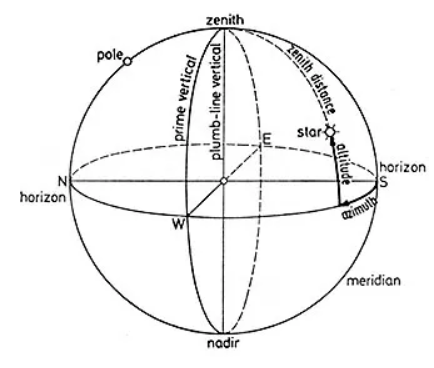 describes two things that are physically as distant from each other as possible. "Diametric," as in the diameter of the a circle. "Antipodal points" are similarly two points on the earth's surface that are diametrically opposed to each other. (A pair of points antipodal to each other are situated such that a straight line connecting the two would pass through Earth's center. Antipodal points are as far away from each other as possible.) Then you have your "zenith" and "nadir" - the points directly above and directly below a hypothetical observer within the celestial sphere. This one is used in astronomy. The zenith and nadir are likewise diametric opposites.
What purpose to each of these points serve relative to each other? Think again about the diameter. The diameter is like a set of spokes in a wheel. The points at which the spoke connects to the wheel are diametric opposites which work together to form the basis of the wheel's structural support. They allow it to move without collapsing.*
The cosmos, while not immediately as straightforward, work similarly. A planet's gravity pulls equally from all sides. Gravity pulls from the center of a planet's core to the edges, rounding it into a sphere over time. Why? Because the goal of everything bound by gravity is to be as close to the center as possible, and a sphere is the only way all points can be equidistant to the center.
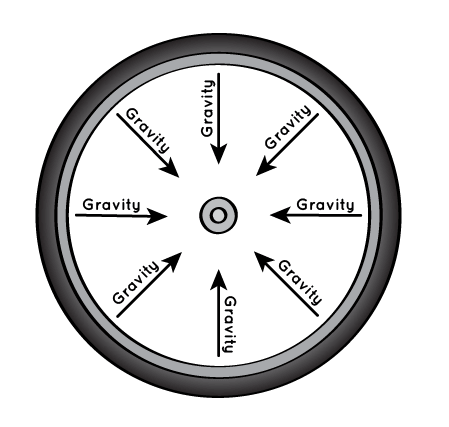
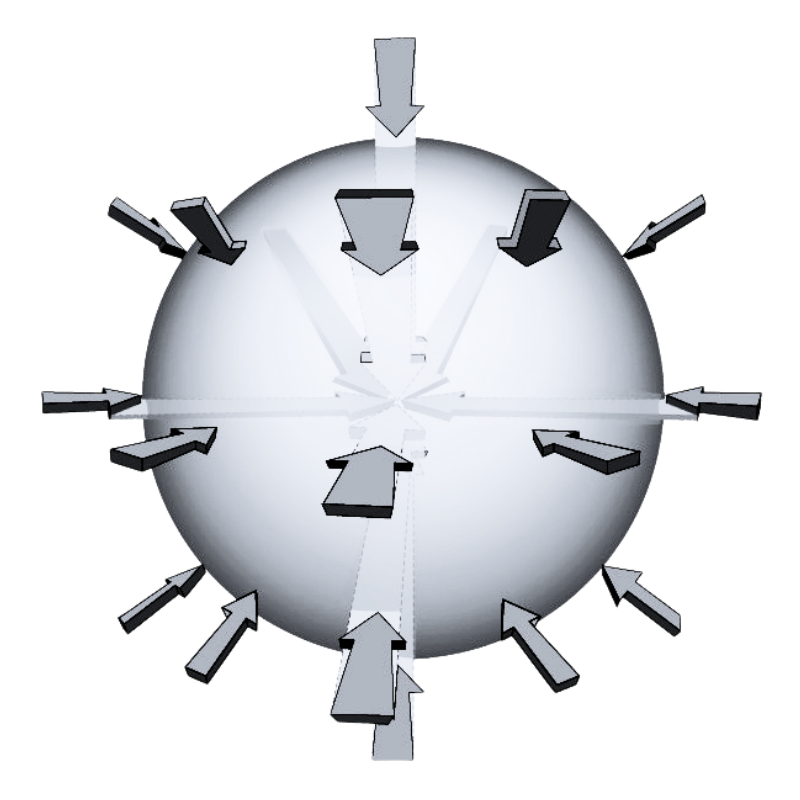
This is why each point on the earth has its diametric opposite (its antipodal point). This time, rather than the spokes providing structural integrity, the spokes represent structural integrity and are themselves a product of it.
As [complexity builds], we need more words and concepts to describe what are ultimately the same processes, and the shape the process creates is equal to the form it generates.
From a point to a line, then from a line to a circle, itself made of an infinite number of diameters, each of which have diametrically opposed points. We've gone in a circle to make a circle: from point to line to circle to line to point. In order to describe diametric opposition, we must first have the circle itself, and in order to have the circle itself, we must have diametric opposition.
Then, from the circle, we create a sphere, whose surface is made of infinite circular cross-sections. The planetary sphere is ruled by a single point within its center, upon which gravity converges and from which the spherical shape is formed through equivalent gravitational spokes. We've gone spherical to make a sphere.
And it continues into infinitely further additive variations. "I looked, and, behold, a new world!" - Edwin A. Abbott, Flatland: A Romance of Many Dimensions.
In other words, in order to describe a relationship(s) between the constituent elements of any concept, you merely have to describe the shape of the concept itself, and vice versa. The center and its opposites reveal the form within, the form within reveals the center and its opposites.
The full scope of anything is the sum of its contradictions. Simplicity is the derivative and mother of complexity, and vice versa.

To describe something in contradictory terms is the closest we can get to describing it truthfully. Order and chaos are at once opposites, equals, two sides of the same coin, one single thing, two mutually-assured and mutually-sustaining components, entropic enemies, etc. - the point is that any direction you go in is leading you at once back and forwards.
The first truth is that man is an animal and has not progressed past his beastliness in a significantly meaningful way, and as such, he is largely flying blind into chaos. He is granted an assured sense of belief in himself by virtue of his cognition, his sense of expanded time, and his own mythmaking - however, this does not translate into any real mastery over a world largely outside of his understanding and control.
The second truth is that all human plans and plots are more involved and more sinister than they appear, shrouded even from their architects by clever self-deceptions and further shielded by morality, the medium of mortal fear. All civilization is a great conspiracy of overlapping and dueling interests, subconscious, semiconscious, and overt. To live is to manipulate the world towards your own survival, to devise and follow strategies and adapt those of others to your own needs. Everybody is permanently encoded with this instinct, and it goes as far back and as broadly as existence itself.
And this is only when it comes to mankind. There are a vast host of largely unknown minds and interests with their own structures of being that man has absolutely no understanding of; and yet, which we are nonetheless inextricably linked to, within, party to, part of.
You will also note that the more you talk about these two contradictory truths that they begin to merge with one another, drawing further apart from each other even as they do so. We can observe this geometrically* or linguistically. What truthful statement can you garnish for which its opposite is not equally true, whether it be a broad generalization of mankind's faults or merits or entirely neutral tendencies; or a narrow point of specificity, a single grain of experience amidst the mortal ocean? We picture a linear ascent to heaven, a polarity of absolutes, but where in existence does such a structure exist? How can it possibly withstand itself or the countless forces exerted upon it without bending and distorting in space and time? The first and second truths are one in the same, and diametric opposites. There is no contradiction if the primary interpretation of all things, observable and otherwise, is paradox.
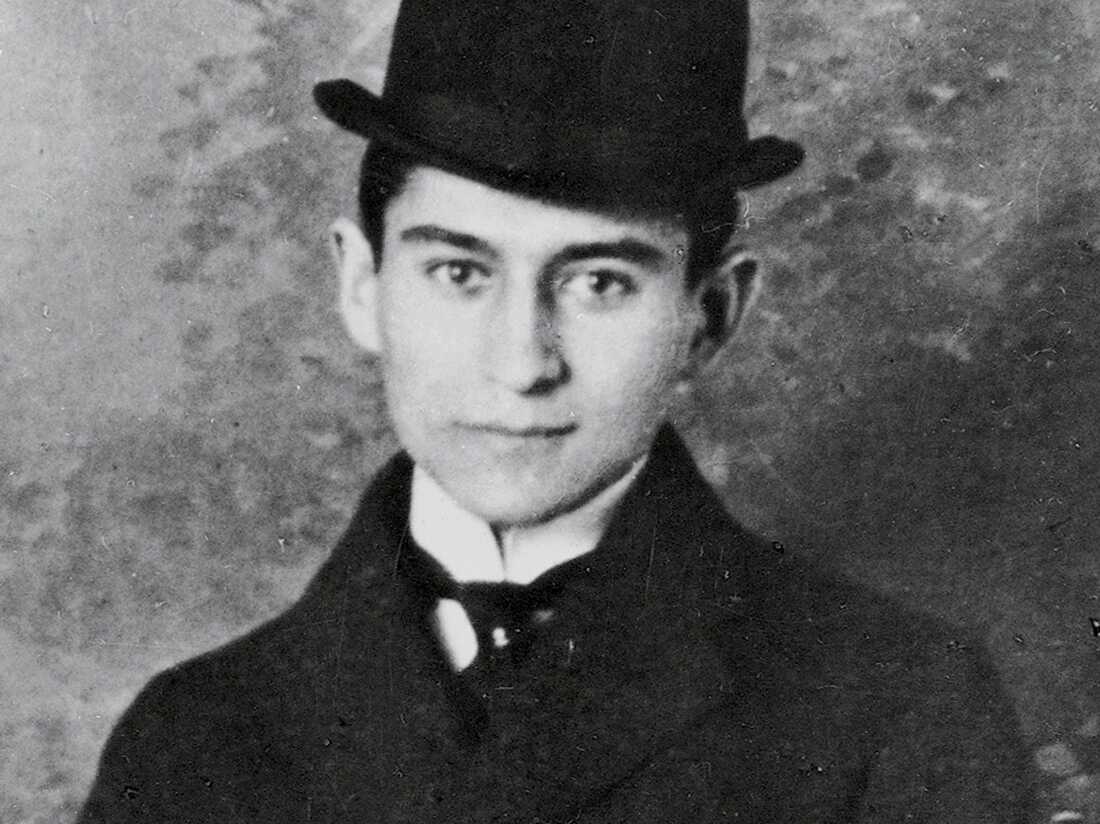 "God said that Adam would have to die on the day he ate of the Tree of Knowledge. According to God, the instantaneous result of eating of the Tree of Knowledge would be death; according to the serpent (at least it can be understood so), it would be equality with God. Both were wrong in similar ways. Men did not die, but became mortal; they did not become like God, but received the indispensible capacity to become so. Both were right in similar ways. Man did not die, but the paradisical man did; men did not become God, but divine knowledge."
He is a free and secure citizen of the world, for he is fettered to a chain which is long enough to give him the freedom of all earthly space, and yet only so long that nothing can drag him past the frontiers of the world. But simultaneously he is a free and secure citizen of Heaven as well, for he is also fettered by a similarly designed heavenly chain. So that if he heads, say, for the earth, his heavenly collar throttles him, and if he heads for Heaven, the earthly one does the same. And yet all the possibilities are his, and he feels it, more, he actually refuses to account for the deadlock by an error in the original fettering."
Man is a great illiterate prophet. Everything within us screams against itself, and those cries conduct a beautiful harmony - we have for our divine archetype the Holy Fool, who worships god through worshipping contradiction.
In the same way, chaos is indistinguishable from certainty. At once we're products of vast causal chains, and by this notion all aspects of observable, material reality are simply because they must be. All branches of time and circumstance are threaded into a web that enshrouds all life, rigid in its individual branches, and yet flexible in its great porous structure. At the same time these realities are brokered by random mutation. Our dual natures are once more in conflict - and in synchronization: we have encoded within us the key to all reality, but we can't read it. Our minds aren't capable of seeing each individual thread, of comprehending it beyond that of the base instinctual level that all living things are inherently capable of.
But remember that for each true statement it's opposite is also true. You can see the shape of god through the holy blasphemy of arrogance. Go into a quiet room and listen, you will hear infinite sounds. Look into the empty sky, you will see the atoms that make up the air, invisible and visible to us, known to us as nothing else is and wholly alien.
* The shape of the cosmos eludes us. Symbols serve as temporarily sufficient placeholders:
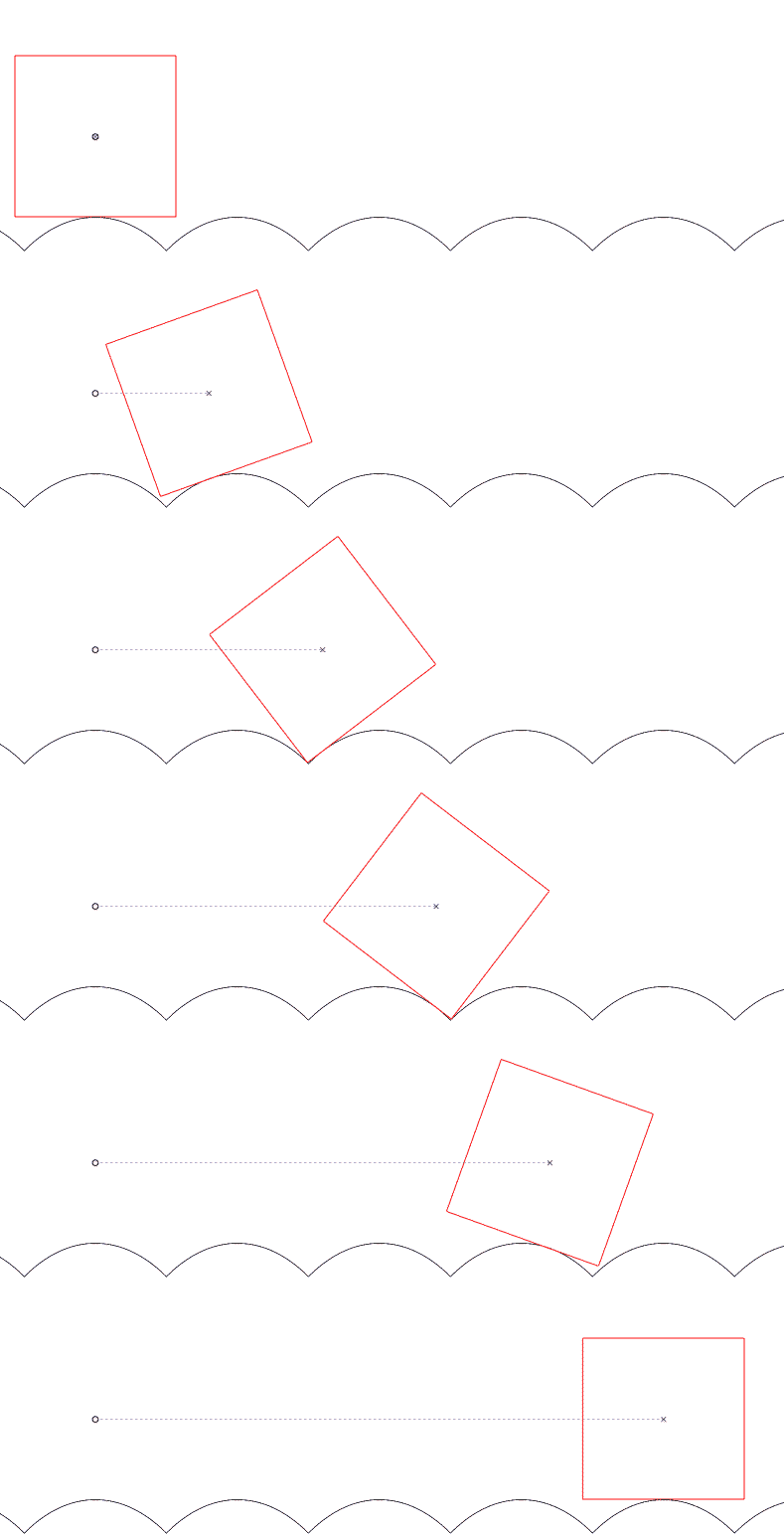
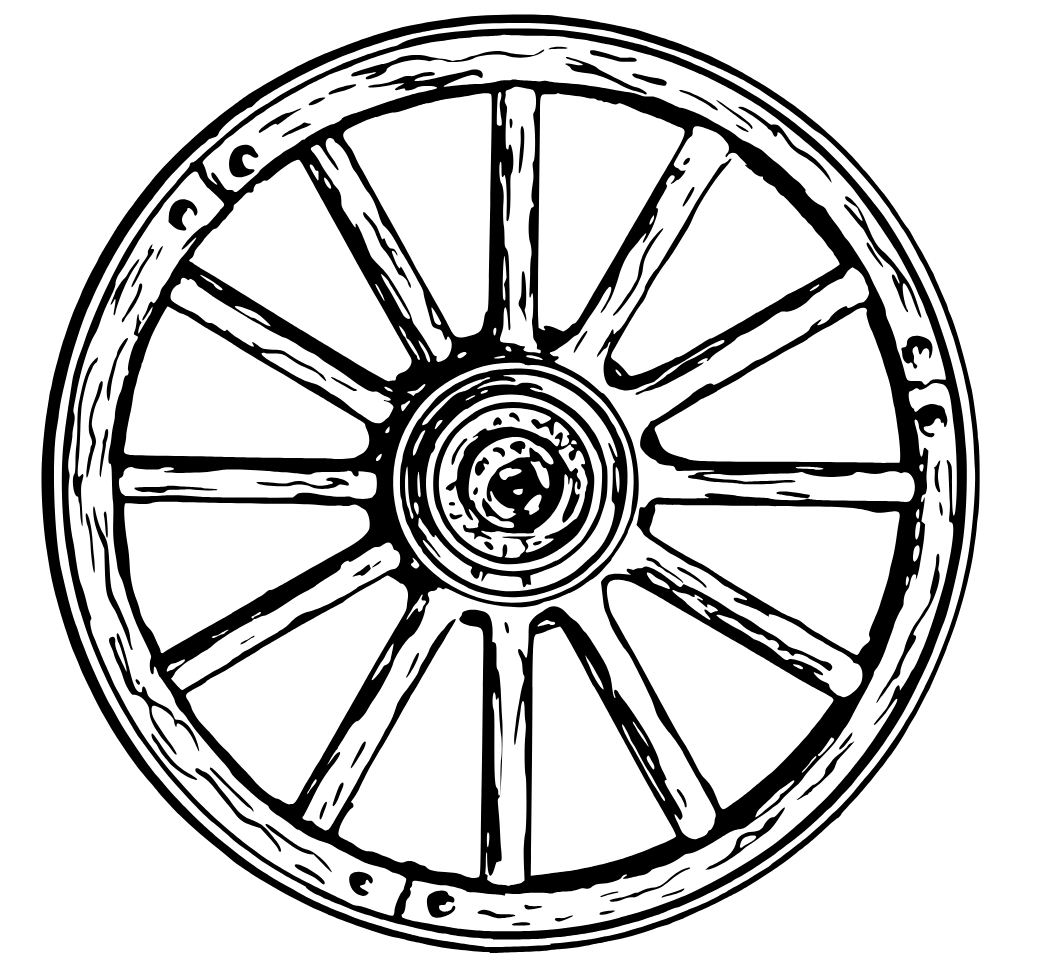 The wheel is a beautiful illustration of the form and structure of paradox reality. A wheel exists and functions in diametric opposition with itself, diametric opposition being the most extreme opposite. The spokes are organized in sets, themselves in diametric opposition with each other, as well as with themselves: the inner and outer points of each spoke as they align with both the axis and the exterior. It is through this diametric opposition that they are able to function.
When a wheel is moving along a surface, several forces are acting upon it at once in order to facilitate this movement:
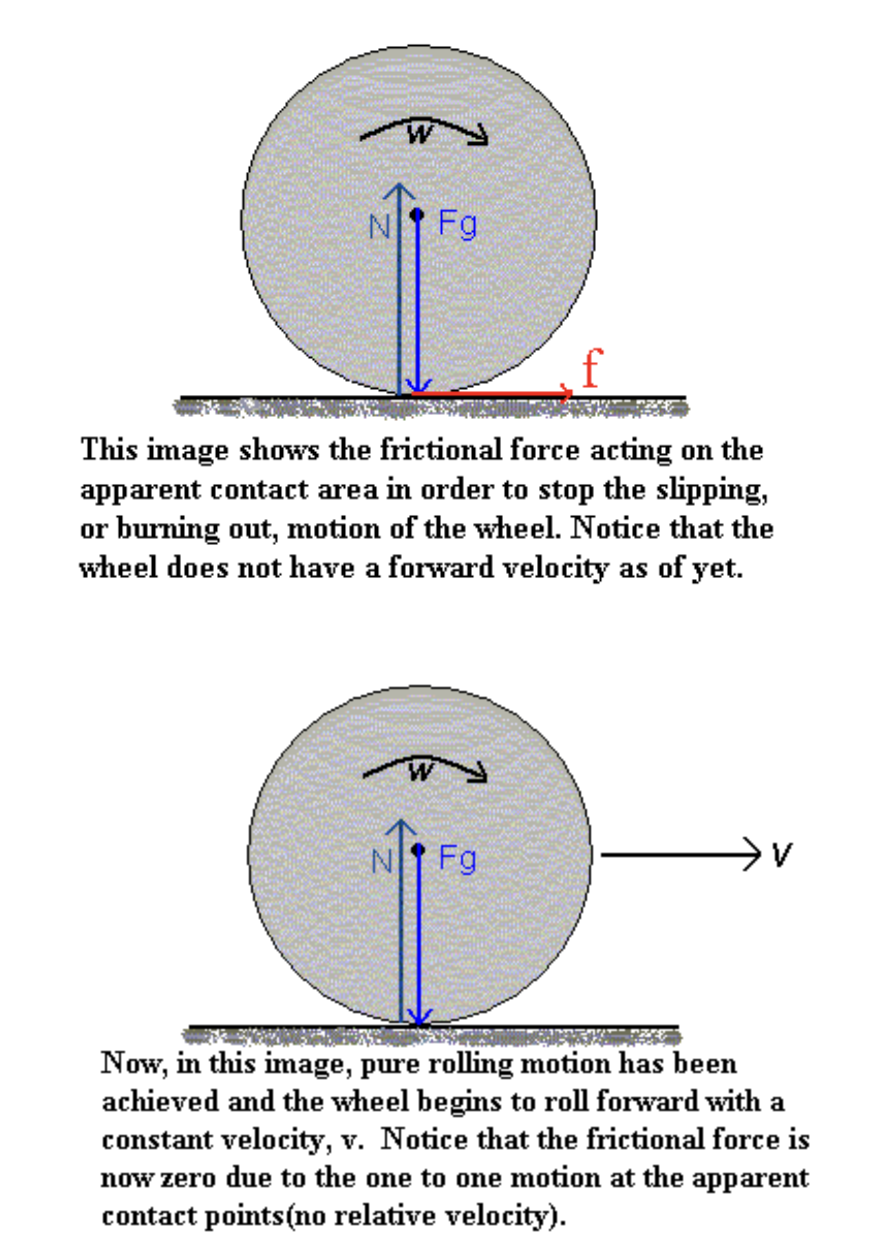
"N" refers to the normal vector, or that which is perpendicular to the surface in question. "Fg" is the force of gravity. Notice how these two forces themselves resembles spokes in this illustration - even in cases where there are no observable spokes, a wheel retains its spokes. The rotation of the wheel is the angular velocity, "w", while the forward movement is "V", and "f" is friction.
These forces are also frequently acting in opposition with each other, as well as alongside each other, in order to produce the intended effect. The wheel could not function without its spokes, or these multiple forces acting upon its different components in different - and often diametrically oppositional - ways.
In other words, it acts through a contradiction of its form. It is both linear and cyclical. It is both in motion and at rest. It is ever-changing and constant.
A wheel can come in many forms and functions. It may or may not have visible spokes. It may or may not have treads to aid in producing friction and thus movement. Some objects which are not referred to as "wheels" still act as wheels under certain circumstances. A compact disc (CD) can become a wheel. Similarly, we can find and identify wheels within ever aspect of material reality.
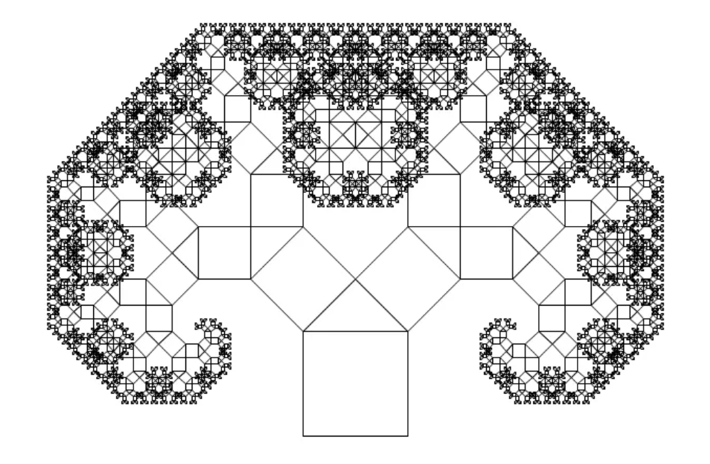
The fractal, which can also be illustrated as a tree, particularly the Pythagorean fractal tree as seen below, is, similarly, a form that integrates through separation.
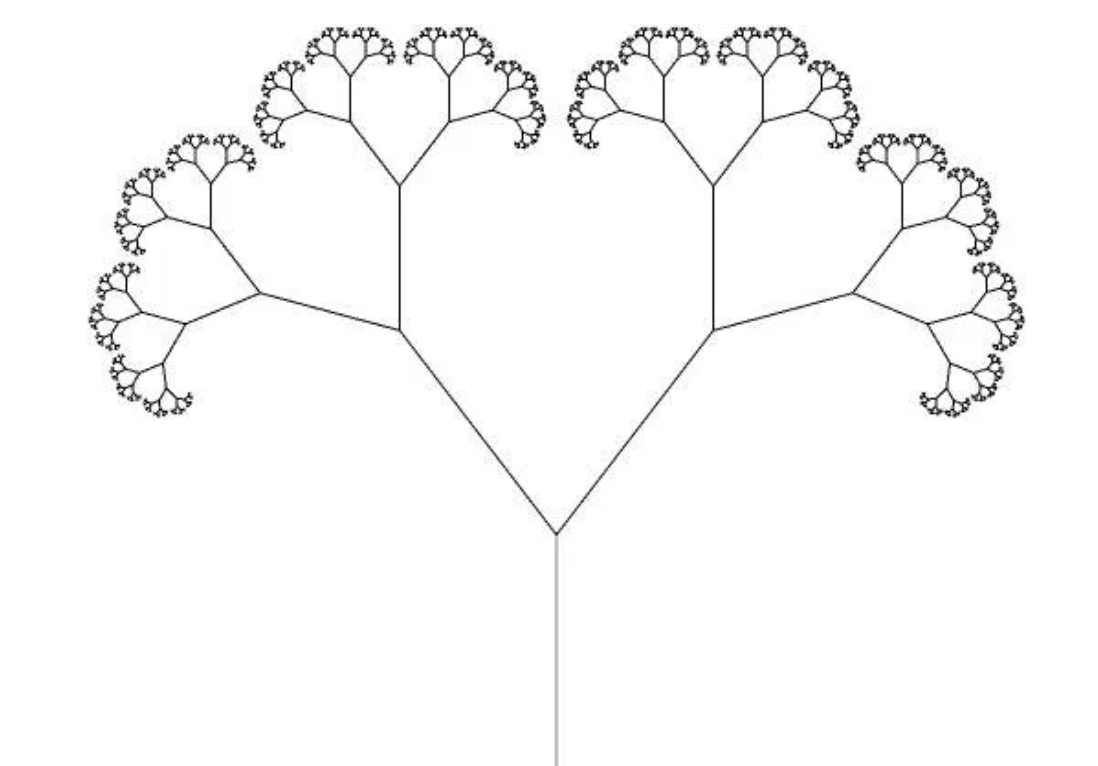
"Things that grow in a natural way, whether cities or individual houses, have a fractal quality to them. Like everything alive, all organisms, like lungs, or trees, grow in some form of self-guided but tame randomness. What is fractal? Recall Mandelbrot's insight: "fractal" entails both jaggedness and a form of self-similarity in things (Mandelbrot preferred "self-affinity"), such as trees spreading into branches that look like small trees, and smaller and smaller branches that look like a slightly modified, but recognizable, version of the whole.
[...]These fractals induce a certain wealth of detail based on a small number of rules of repetition of nested patterns. The fractal require some jaggedness, but one that has some method to its madness. Everything in nature is fractal, jagged, and rich in detail, though with a certain pattern. The smooth, by comparison, belongs to the class of Euclidian geometry we study in school, simplified shapes that lose this layer of wealth.